
There are a million artforms, maybe more. Most are understood only by those who practise them. The same can be said of dance. Of all the world’s movement languages, most are spoken quietly; in classes, at social gatherings. The path to performance, to audience, is either torturous or largely non-existent. As for careers; forget it.
Here in Australia, where big distance and small population limit opportunity even further, the visibility problem affects dance styles you would expect to have a bigger presence on the professional stage. Or so says former Australian Ballet dancer and internationally renowned tap artist, Garry Stocks.
Despite its profile (think 42nd Street, Tap Dogs, etc) the tap dance sector lacks a continuous and viable stage presence in this country.

As Stock says it, “From living in that ballet world, or that contemporary dance community for such a long time, there was always this idea of wanting to be relevant and fresh. I think art has always kind of gone along with what’s happening in the community, with what people want to say and feel is relevant. But I think what’s different is that ballet and contemporary have established ecosystems, and this allows them, in Australia anyway, to be pushing those boundaries and just being on stage.”
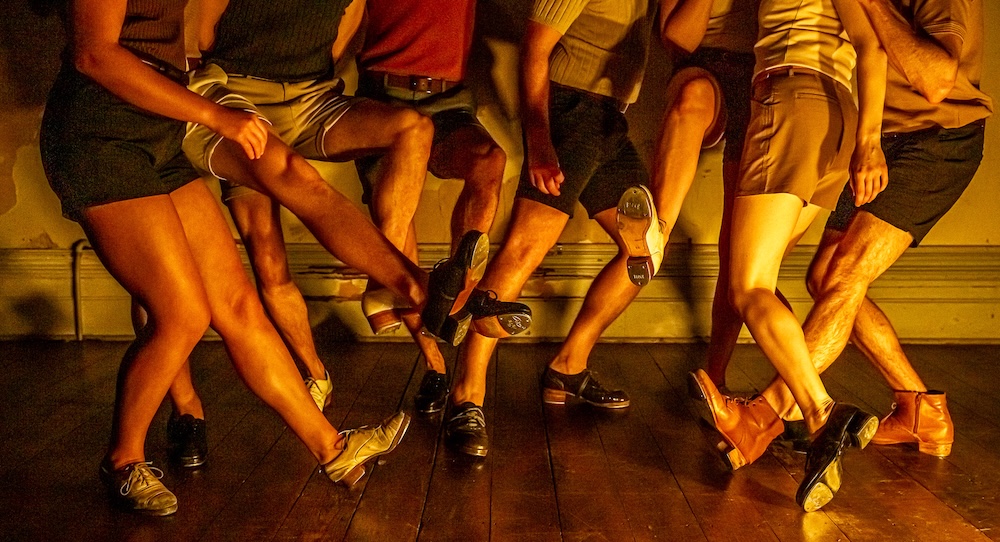
Having migrated from ballet back to his boyhood love of tap, he now runs the eponymous Studio Stocks in Melbourne, where he conducts regular classes, mentors young dancers and self-produces original, tap-based works. Indeed, come October, he will be remounting his tap/contemporary hybrid show, Melancholia, at Chapel Off Chapel.
“There’s so many people that tap dance in the community who maybe don’t even know that this is existing,” he contends. “The idea about bringing it back is, well, there’s so much more to Studio Stocks and things I want to develop; but after the first iteration of the work, I was obviously talking to the cast and a few people that are really good sounding boards, and I was like, ‘maybe we should restage this.’”
As it did for its February 2025 premiere, staging Melancholia will involve significant personal, creative and financial risk. This, Stocks suggests, is the nub of tap’s problem. “With tap dance, we’re not at the point where we’re able to continue to explore conversations on stage. The platform out there is very minimal. The chance to be able to go and see a professional tap dance show is pretty tiny, to be honest. We’ve had Tap Dogs and that kind of thing, but the visibility of this craft is limited.”

However, what Stocks is keen for us to comprehend is that tap’s issue is not one of ‘relevance.’ Unlike ballet and opera, where talk of cultural currency is never far below the surface, he insists that his beloved artform does not require a root and branch review. “It’s not about refreshing the artform or anything like that, because without those platforms of visibility it’s not about ‘are we being relevant?’ Because we’re not even being seen.”
The obvious question is why. Most of us have seen (and heard) tap. Many of us have even tried our hand at it in class. We may have caught snippets in musicals, seen videos on YouTube, yet we are not, according to Stocks, beating down the doors to see more.
Stocks scratches his head, adding, “I grew up tap dancing, and I fell in love with ballet as well, but at that time ballet presented a pathway. I could see a pathway forward to this potentially becoming a professional career. None of these pathways are absolute, they’re all just a way to follow, and if you put your best foot forward you could possibly make it into a profession. Also, you could probably find something to go and see here in Melbourne at almost any time. But that’s not true of tap dancing.”
In short, tap’s trajectory is truncated. “There are a lot of people who study tap dance in Australia and they could regularly go to ballet or contemporary or music theatre,” he explains. “But if I wanted to go and see a professional tap dancer in Australia, er, I don’t even know where I would start.”
Now, before we cue the violins, Stocks wants us to know that all is not lost. Far from it. As someone who has overcome considerable adversity to carve his niche in the tap world, he knows there is no giving up. “Every artist is the sum of everything they’ve seen,” he says. “My contemporary and ballet backgrounds obviously influence everything I do artistically … But also, I’m at a point in my life where I’m not being told what to do artistically and … there’s so much more to explore with this artform. There’s just an endless possibility that I don’t even think we’ve touched the surface of.”

Hence, Melancholia. Money where mouth is, and all that. However, rather than dwell in ego and missionary zeal, Stocks has a crystal clear sight of the future. Namely, his star student, a young man who made his debut in Melancholia and has since gone on to be invited overseas to attend a number of events and residencies.
Of Lucas Thomson, he enthuses, “I couldn’t have hoped for a better result. I mean, who knows if anything is going to come of it, but watching Lucas go from being a student of mine to being at international events is amazing. He’s actually in Chicago as we speak. He was invited over by Cartier Williams [the famed American dancer, choreographer and teacher], to Rhythm World. And Lucas is, like, hungry for tap dance now. I see him almost every week and I think he believes that … not that there’s something ‘out there’, but that there’s something he can provide the tap dance community.”
You may not see it yet, but Stocks wants you to know that, if you keep your eyes peeled, you may soon notice that tap dance pathway, lit up and ready. Thereafter, you may find yourself diving headlong into the hot shoe shuffle of the dance world’s most inherently musical expression.
Studio Stocks will present Melancholia at Chapel Off Chapel from 1 – 3 October. For tickets and more information, visit www.garrystocks.com/melancholia-studio-stocks.
By Paul Ransom of Dance Informa.