
It started when the wall came down.
When one of the original Tap Dogs spoke with Dance Informa prior to his recent Morning Melodies concert in Melbourne, and he was unpacking the story behind On Tap (which he described as “a quick history lesson”), a tale of Cold War drama and tap dance serendipity emerged.
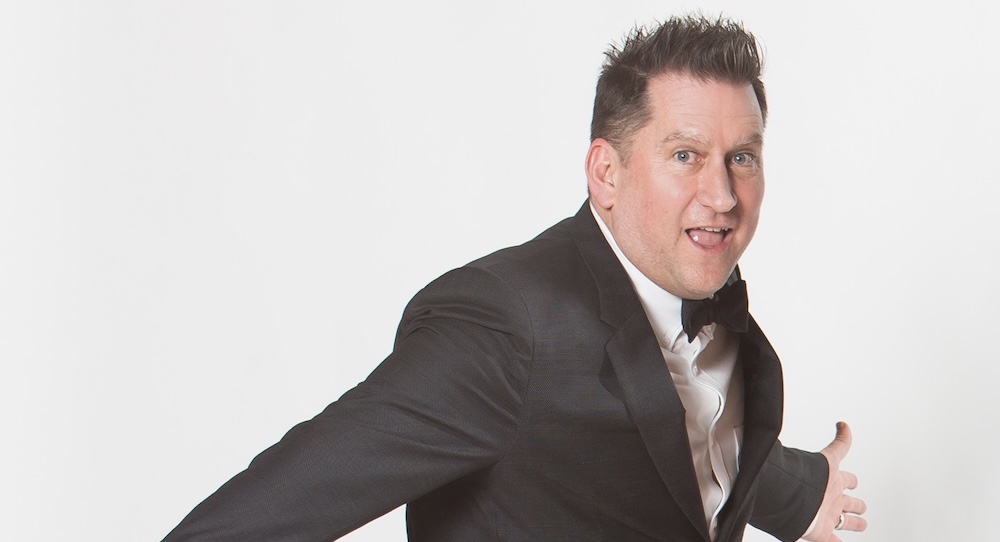
The man in question was Christopher Horsey, whose life in dance seems to encapsulate much of the Australian authored tap revolution ushered in during the 1990s. Having won an underage category at the Fred Astaire International Tap & Jazz Championship as a 12-year-old, he decamped from his native Queensland to Sydney as a teenager and found himself in a long running production of 42nd Street. From there, it was Dein Perry’s genre-disrupting classic Tap Dogs and later the movie Bootmen. Now, in 2025, he runs CODE: Floor, a teenage tap crew, and creates shows like On Tap.

However, as a 17-year-old dancer in the southern spring of 1989, he could scarcely have foreseen the role he would play in the reimagining of his favourite dance form.
During the run of “the granddaddy of all tap musicals,” the show’s producer was negotiating with the then East German (Soviet Bloc) government to bring the production to East Berlin. However, events intervened, and on November 9, 1989, the Berlin Wall fell, marking the symbolic end of the Cold War and triggering the reunification of Germany.
“So, therefore, there was no East German government to pay us, and the tour was cancelled. So that left the whole cast and crew in Sydney without any work over that summer,” Horsey recalls. “And that’s when Dein Perry assembled a few of us, and we got together in a studio to develop an ‘urban’ style of tap dance.”
For context, whilst doing 42nd Street, Horsey and others in the cast had wondered why they were dancing in formal clothes. “Why do we have to wear top hats and tails? Or some ghastly creation that Liberace might have worn? Basically, you never saw tap in anything other than those clothes.”
Thus, over a three-week period, Perry, Horsey and Co started “working on and developing” the urban style. “And we filmed it. This video…was the genesis of Tap Dogs and Hot Shoe Shuffle.”
The latter became a smash hit at home and abroad. However, as Horsey points out, “Hot Shoe Shuffle was not the urban style we were working on. In fact, the idea was put on hold while we were doing it…but it was while we were in London doing the show that Dein Perry got the news that the Sydney Theatre Company were going to produce his urban style show, which went on to become Tap Dogs.”
In the 30 years since, across a career that has also included multiple music theatre roles, Horsey never lost touch with his “side hustle passion.” The recent Morning Melodies concert simply drew all the strands of the journey together. These days, as a stage veteran north of 50, he retains his boyhood love of tap.
“Tap dancing is music,” he says. “It’s percussion, and it has a soul. Of course, it has a rhythm, but it also tells a story; and once you know how to tap…you realise that there is a story to be told through the musicality and musicianship of tap dancing. As long as it’s not always being used as the class clown of musical theatre, which it quite often is, there is a heartfelt emotion and seriousness about it.”
Indeed, Horsey likens the intricate technicalities of tap to those involved with playing music. “All dancing requires you to be moving in unison with others on stage, but with tap, there’s that added element of being in a band. You have to listen to each other.”
Unlike ballet or contemporary, tap has a deliberate and crafted sound. In many ways, the foot strike is the dance. As Horsey explains, “There’s an unsaid negotiation going on, because the more you do it, and the more you tap with that one person, or those five or six, there starts to be a negotiation where you go, ‘Hang on, I would strike the floor and interpret the melody like this, but the person next to me will have a slightly different take on it, so I might jump onto what they’re doing at that place in the bar.’ And, if you can manage to do that, without verbalising it, there’s the magic.”
Put more simply, he states, “Every time I choreograph a routine, I’m essentially writing a song.”

After 40 years performing in competitions and shows, Horsey does not appear ready to leave the tap shoes on the shelf. “The passion has never faded for me in terms of performing,” he observes. “I mean, I’ve been in multiple musicals where it became a job; and when it got to being a job I started to think, ‘well, I may have lost my passion for this particular style of performing arts’ but when it comes to tap dance it’s still a thrill to get in front of people and make noise.”
These days, he has the youth and energy of CODE: Floor and the presence of his own kids, (daughter Polly and son Teddy), to keep the energy and motivation alive. “On any given day, just to see them walk through the door is an inspiration to me,” he reveals. “It’s a privilege for me to work with them and for them to learn my songs.”
Looking forward, we may yet see one of the young charges he mentors helming their own Morning Melodies concert. (Having celebrated its own 40th anniversary this year, Morning Melodies, like Horsey, is already gearing up for 2026. While Horsey’s teenage crew prep for the filming of a web series, MM is getting ready to stage another season of monthly matinee concerts.)
Dance trends and careers may come and go but, as Horsey reflects, his number one wish is that audiences continue to have the opportunity to see – and more importantly, hear – tap dancing live.
You can follow Christopher Horsey on Instagram: @christopher_horsey.
By Paul Ransom of Dance Informa.
Share this: