
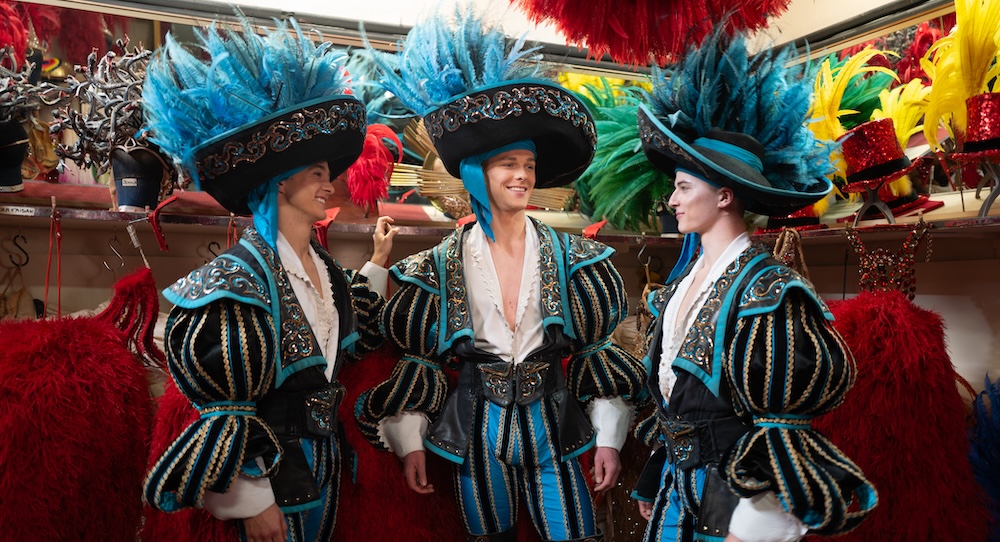
Few venues in the world carry the same myth, magnetism, and enduring allure as the Moulin Rouge. Since opening its doors in 1889, at the tail end of Paris’s bohemian golden age, it has stood as both a reflection of its time and a force that continues to shape it. This was an era where boundary-pushing artists like Vincent van Gogh, Henri de Toulouse-Lautrec, Pierre-Auguste Renoir, and Edgar Degas gravitated toward Montmartre, drawn by its artistic freedom and electric atmosphere. The Moulin Rouge quickly became a dazzling playground where the elite could brush shoulders with the avant-garde – an intoxicating blend of glamour, rebellion, and spectacle.

More than a century later, it remains one of Paris’ most iconic cultural landmarks – a bucket-list destination where audiences from across the globe gather to witness a show that is as opulent as it is exhilarating. Feathers, sequins, and shimmering tableaux define the visual world, but beneath the surface lies a deeply rooted performance tradition. The Moulin Rouge continues to honour its origins in vaudeville, cabaret, and music hall, presenting a true variety show: singers, dancers, circus artists, and musicians seamlessly woven together into a high-energy theatrical experience. From breathtaking aerial feats to the elegance of an emotionally charged classical duet, and of course the electrifying French can-can, the current show is a masterclass in contrast, pacing, and spectacle. It is a place where history is not only remembered – it is felt, the moment you step through the doors.
For Australian dancers, the connection runs deep. For over 30 years, performers from Australia have taken their place on this legendary stage, and today they make up a significant presence within the cast. As auditions once again arrive on Australian shores, the opportunity to join this lineage is both tangible and extraordinary.
We spoke with three Australian male dancers currently performing at the Moulin Rouge – Benjamin Andrews (Gippsland), Jake Barker (Gold Coast), and Calum Cameron (Perth) – about their journeys, the demands of the role, and what it truly means to be part of this world-renowned company.
Can you describe the audition process as you experienced it?
Benjamin Andrews
“My audition was on the Australia tour back in 2023. I remember it being a thorough audition where we got put through most styles of dance as well and touching on essential can-can techniques. There were numerous cuts made throughout the day due to the amount of people that attended, and then towards the end we learnt a jazz combination that was filmed and kept on file. It was a long day, and you really had to put your best foot forward to showcase your strength as a well-rounded performer.”

With auditions coming up in Australia, what would you say to male dancers who may not have considered this path?
Calum Cameron
“Go for it! You have nothing to lose by auditioning; all you have to gain is experience and knowledge. Even if this is a path you have not considered before, it is worthwhile to get in the room and get in front of the panel. The job is fun and rewarding with many branching pathways inside the company that you can aim for once you’re here. You can’t write something off until you have tried it, and you will never know if you don’t go to the audition.”
How did your training in Australia prepare you for the demands of the Moulin Rouge?
Andrews
“I think training in Australia is some of the best training in the world. Going through full-time schools that have you training eight to 10 hours every day builds a massive amount of resilience and strength to be able to deal with the demanding nature of contracts such as Moulin Rouge, where you’re working six days a week. My experience training back home set me up with a good work ethic and a clear vision of what I wanted to achieve.”
The spotlight often falls on the female dancers. How would you describe the role of male dancers within the Moulin Rouge?
Jake Barker
“The male dancers are an important aspect of the show. While the spotlight may not always be on us, it’s our role to support the females and ultimately make them shine on stage. The energy we bring helps shape the whole atmosphere on stage.”

The Moulin Rouge has such a rich history. How does it feel to be part of that lineage every night on stage?
Cameron
“Having the opportunity to perform in such a prestigious establishment night after night is one of the greatest feelings I’ve ever experienced. Knowing that the Moulin Rouge has been able to persist through history and is still bringing in such large and diverse crowds every night makes it all the more meaningful to perform at. I’m so proud to be a part of a company that has brought entertainment, joy, and wonder to people for many generations and hope that I, too, can bring that kind of presence on stage with me every night.”
What’s one aspect of the job that audiences might underestimate when it comes to the male dancers?
Andrews
“I think definitely the physicality and skill demand. We have to be as flexible as the girls, have the strength to do partner work, the cardiovascular endurance, and the performance aspect. Without any of these, the show wouldn’t be the same.”
What has been your proudest moment performing at the Moulin Rouge so far?
Cameron
“For me, my proudest moment at the Moulin Rouge so far would have to be my opening night. It may have not been the most successful night out of all of my shows so far, but it will go down as one of my favourites – as my first-ever professional performance and first night dancing in Paris to a massive audience. It will remain one of my proudest moments to know that I achieved a dream that I had been aiming for so long. And it reminds me that I can achieve anything I set my mind to, and I can keep striving to get better as a dancer and as a performer.”
What have been the greatest challenges?
Barker
“Keeping your body and energy consistent with such a demanding schedule. Recovery and rest are just as important as the show.”
How would you describe the atmosphere backstage before a performance?

Barker
“A mix of focus and fun. Stretching, last-minute jokes, and everyone doing their costume presets. We’re all getting into the zone but still supporting one another.”
Has your perception of cabaret or this style of performance changed since joining the company?
Andrews
“No, not changed, but I think it’s become more fully realised. It’s definitely harder than I initially anticipated, and I have a huge respect for the history of the style and all the other dancers in the company.”
If you had to describe the Moulin Rouge experience in one sentence to someone who’s never seen it, what would you say?
Andrews
“A historical spectacle that’s withstood the test of time.”
Barker
“It’s like stepping into a different world. The glamor, emotions, and completely unforgettable moments.”
Cameron
“Prepare for sparkles, feathers, and a great time as you watch high kicks, jump splits, and the elegance that is the Moulin Rouge.”
From the outside, the Moulin Rouge dazzles with spectacle with its feathers, rhinestones, and iconic red windmill instantly recognisable across the world. But behind the glamour lies something far more profound: a living, breathing tradition sustained by generations of artists who bring discipline, resilience, and extraordinary versatility to the stage each night.
For Australian dancers, this is more than just a contract. It is an invitation to step into history, to contribute to a legacy that has endured for over a century while continuing to evolve. As auditions approach, the message from those already living the experience is clear: take the chance. Whether it becomes your pathway or simply part of your journey, walking into that room could be the first step toward joining one of the most iconic stages in the world.
Because the Moulin Rouge, you’re not just performing in a show – you’re becoming part of a story that is still being written.
Australia auditions for Moulin Rouge are as follows: Perth (5 July), Melbourne (8 July), Sydney (12 July), Brisbane (16 July), Gold Coast (19 July), and Sydney (23 July). For more information, click here.
By Linda Badger of Dance Informa.
Share this: