There is a specific kind of dread that hits you on a Tuesday afternoon. It’s not about choreography or tuition. It’s the headline you just read about Artificial Intelligence passing the Bar Exam, or writing code, or designing a marketing campaign in seconds.
If you have a spouse with a “safe” corporate job, you see it in their eyes, too. The emails are getting automated. The spreadsheets are filling themselves. The “stable” career path suddenly feels like walking on thin ice.
Meanwhile, at the studio, it’s chaos. Miss Sarah is out sick, the Wi-Fi is down, and a three-year-old just refused to enter tap class because her shoes “feel crunchy.”
It feels messy. It feels inefficient. And I have good news for you: That mess is exactly what is going to save you.
The “safe” job isn’t safe anymore
For 40 years, the “smart” financial move was simple: Get a degree, get a laptop, get a corporate job. Dance studios were considered “passion projects”. Cute, but risky.
But look at what is happening right now. AI isn’t coming for the plumbers or the electricians. It’s coming for the middle. It is coming for the jobs that happen on screens. If your job involves analysing data, writing reports or managing schedules, a piece of software is learning to do it faster, cheaper and without needing a coffee break.
That “steady paycheck” your spouse brings home? It’s not backed by gold anymore. It’s backed by tasks that are rapidly becoming optional. The risk has shifted. The cubicle is the danger zone.
Why robots can’t teach shuffle-ball-change
Now, look at your dance studio.
Have you ever tried to get a room full of six-year-olds to stand in a straight line? Have you ever had to comfort a teenager who is crying because they forgot the combination, while simultaneously tapping your Apple Watch to pause the music?
That is not data processing. That is high-stakes, real-time human management.
AI is brilliant at logic. It is terrible at vibe. It cannot read the room. It cannot gently correct a sickled foot. It cannot give a high-five that actually means something.
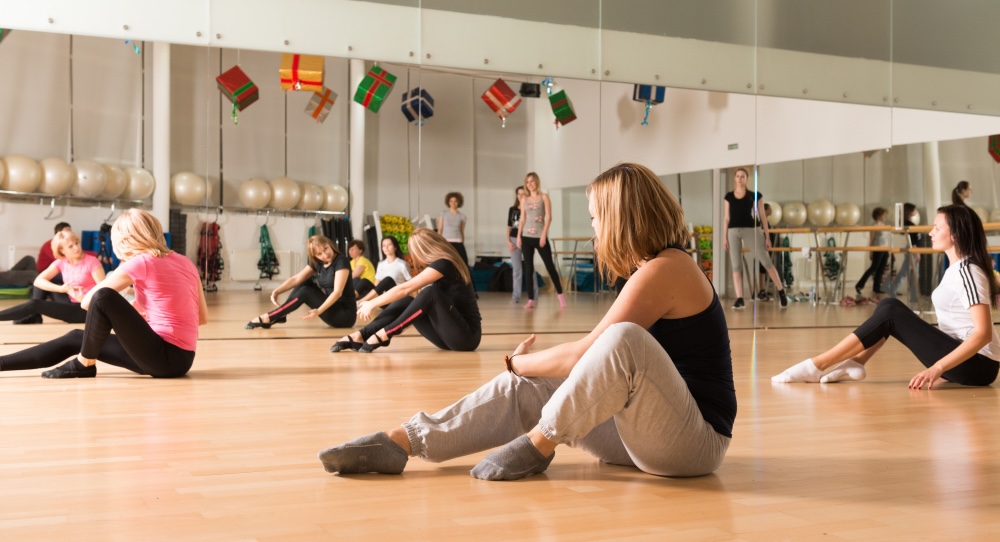
Imagine a robot trying to teach a “Mommy and Me” class. It would short-circuit in 10 minutes. Dance requires embodied presence — bodies in a room, moving together, breathing together. It is slow. It is physical. It is inefficient.
And in an economy where everything digital is being automated, “inefficient” human connection is becoming the most valuable luxury product on earth.
The portfolio: don’t put all your eggs in the “laptop” basket.
This brings us to the money.
Most studio owners (and their spouses) worry that the studio is the risky part of their life. They think, “If the studio has a bad month, the corporate job will save us.”
I want you to flip that thinking upside down.
The studio is your hedge. It is the asset that behaves differently than the rest of the economy. When the tech sector has layoffs, parents don’t immediately pull their kids from dance; not because money doesn’t matter, but because in a world of screens, embodied activities are the last thing families want to give up.
The studio is a “counter-weight.” When the digital world gets volatile, the physical world stays steady.
Of course, a hedge only works if it’s designed to absorb shock. A single location can do that to a point, but it still concentrates risk in one body, one lease, one calendar.
The multi-studio “life raft.”
If we agree that the studio is actually a safer asset than a corporate middle-management job, then the next logical step is scary but necessary: We need to treat it like a serious business.
For many, that means owning more than one.
I know, I know. You’re already tired. But hear me out. Owning one studio is stressful because you are the business. If you get the flu, the business gets the flu.
Owning two or three studios forces you to build systems. You can’t be in three places at once, so you have to write things down. You have to train leaders. You have to build a machine that runs without you.
When you do that, you stop being a dance teacher with a lease and start running a business built to survive without you. You build a family income that doesn’t depend on a boss who might replace you with a chatbot next quarter.
The last human rhythms.
We are heading into a weird future. Many of the “smart” jobs are disappearing, or quietly reshaping themselves. The screens are winning the battle for attention.
But they can’t win the battle for connection.
Your studio is one of the few remaining places where humans simply move at a human pace, and exist together. No algorithms. No auto-correct. Just sweat, music, and the very human struggle to get better at something difficult.
So, the next time you’re overwhelmed by the chaos of concert week, take a deep breath. Look at the madness around you. That isn’t just stress. That is job security.
The robots are coming for the spreadsheets. The dance floor moves to a different rhythm.
By Paul Henderson of Tiffanydance Holdings.
Paul Henderson is the Co-Founder, COO & Chief Strategy Officer of Tiffanydance Holdings, which includes Twinkle Star Dance Academy Franchise, Twinkle Star Dance, Dance the Dream, Raising the Barre, and Tiffany’s Dance Academy. A researcher, writer, and unapologetic data nerd, Paul has spent nearly three decades at the intersection of dance, technology, and educational innovation. He currently studies the developmental benefits of dance in partnership with the University of Pennsylvania and Stanford.
When he isn’t running a studio empire or shooting recital photography in total darkness, Paul writes about the hidden inner life of studios for Dance Informa and his Substack, The Balanced Barre. He lives in the Bay Area of California, still believes dancers are the smartest humans on earth, and remains committed to documenting the magic, chaos, and humanity of the dance world.
Share this: