
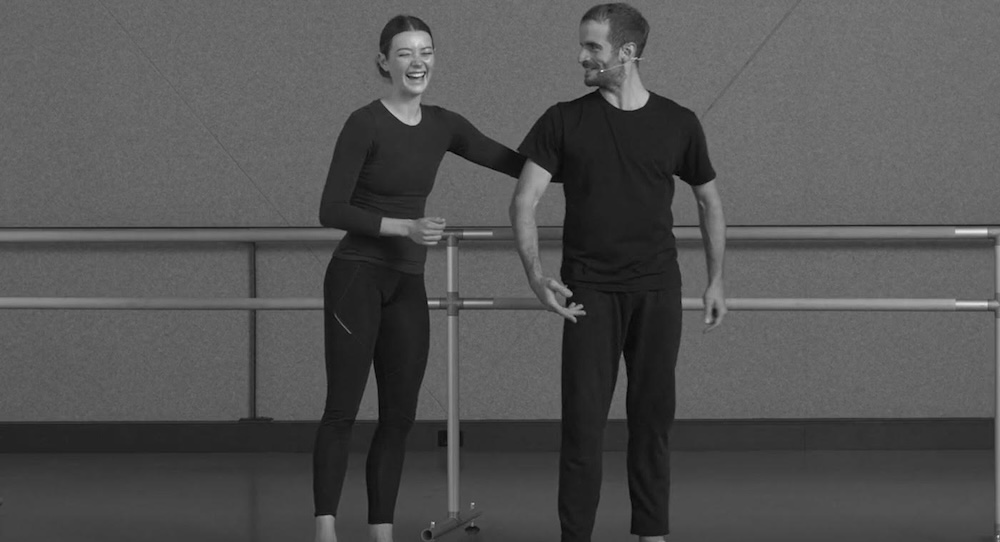
The appointment of husband and wife Victor Zarallo as Director of Training, alongside Mia Thompson as Training Coordinator, marks an exciting new chapter in Ballet Theatre Queensland’s (BTQ) commitment to elite youth dance education.
Zarallo, born in Barcelona and a graduate of the prestigious Royal Ballet School, brings a rich international career to his leadership role, including promotion to Soloist at Scottish Ballet and a tenure at Sydney Dance Company as both dancer and Rehearsal Director. Thompson, Queensland-born and trained at the Western Australian Academy of Performing Arts, draws on professional experience with Queensland Ballet, Scottish Ballet, and Sydney Dance Company, both as a dancer and Rehearsal Associate, offering deep performance insight and a strong mentoring spirit.

Together, they join BTQ at a pivotal moment — as the company prepares to launch its full-time Advanced Diploma of Dance (Elite Performance) program in 2026 — promising an integrated training environment where technique, artistry and resilience converge. Their combined strengths, one leading the overarching training strategy and the other coordinating its delivery, position BTQ to nurture the next generation of professional dancers with both international experience and local commitment.
Victor, as the Director of Training at BTQ, what excites you most about this new position?
“What excites me most about stepping into the Director of Training role is the opportunity to make a real impact on the next generation of dancers. Being able to work with young artists each day and support their growth in meaningful ways is something I value deeply. I also feel fortunate to be part of a strong team of like-minded educators at BTQ. It is a gift to come together with a shared vision to shape holistic, confident, joyful and intelligent dancers for the future.”
Given your background from Barcelona, through to London, Scotland and Australia, how will your diverse training and performance experience shape the vision and curriculum you bring to BTQ?
“Dancing with Scottish Ballet, a company whose repertoire ranges from Sir Frederick Ashton to Crystal Pite, taught me the importance of versatility. Today’s dancers must be able to move fluidly between classical and contemporary worlds. My time with Sydney Dance Company helped me discover how to trust myself as an artist, another essential skill for a sustainable career.

These two ideas, versatility and self-trust, will be central to the vision I bring to BTQ. I want students to develop strong foundations in both classical and contemporary technique, while also discovering who they are as individual artists.”
What are the most important qualities a young dancer must develop in today’s professional environment, and how will your role enable students to cultivate them?
“Building on what I mentioned earlier, I believe the essential qualities for young dancers today are versatility, curiosity, confidence in their artistic identity, and resilience. The industry demands dancers who can adapt quickly, take risks, and bring individuality to their work while never losing sight of the joy that first brought them to dance.
Through diverse training, exposure to repertoire, and mentorship that supports both technical and personal growth. My goal is to help students develop the mindset, discipline, and artistic voice they need for a professional career, while staying connected to their love of performing.”
As BTQ launches its Advanced Diploma program in 2026, what specific innovations or changes will you introduce in technique, artistry, conditioning or mentorship that will distinguish this offering?
“The Advanced Diploma is built on a comprehensive blend of classical and contemporary training, and real-world performance experience. Students work each day across ballet, contemporary, repertoire, partnering, creation, conditioning, and daily reformer Pilates, mirroring the structure of a professional company.
A defining feature of the program is the opportunity to rehearse and perform in BTQ’s major productions at the iconic QPAC, providing dancers with authentic stage and rehearsal experience that strengthens their technical, artistic, and professional readiness.
We will also offer a part-time stream for younger dancers, supported by BTQ’s progressive Performance Pathway Syllabus, providing early, structured exposure to a professional-style environment. Across both pathways, students receive individualised mentorship and support, helping them refine their technique, develop their artistry, and build the resilience needed for a sustainable career.”

Mia, having danced professionally in companies from Queensland to Scotland and Sydney, how will your journey influence your approach as Training Coordinator at BTQ?
“I believe my diverse experience will greatly inform my approach as Training Coordinator at BTQ. Working with three incredible, yet vastly different, companies, both in Australia and abroad, has given me a greater understanding of the broader dance industry. I hope to draw on my experience to guide young dancers as they develop their artistic identities and progress along the pathways that best reflect their abilities and aspirations.
The dance industry can be both exhilarating and intimidating. It’s easy to feel lost or pressured to pursue careers based on others’ expectations rather than what truly resonates with us. I want to encourage young dancers to explore their own movement, understand their passions, and pursue a direction that aligns with their authentic selves. My goal is to foster self-exploration, confidence, and a genuine love for dance.”
What do you see as the key responsibilities of a Training Coordinator in a full-time elite program, and how do you intend to balance administrative, pedagogical and student-wellbeing elements?
“I see the Training Coordinator position as one that underpins the program’s daily flow, bringing structure, organisation, and clear communication to support both teachers and dancers throughout their training.
My experience as a Rehearsal Associate with Sydney Dance Company taught me how to balance structure with care in a rehearsal environment, creating a space where dancers feel supported, challenged, and free to grow. Combined with my teacher training through the Rambert Grades program, I’ve developed a strong foundation in progression-based pedagogy that I’m excited to bring to BTQ.
Ultimately, my aim as Training Coordinator is to support the program’s daily rhythm so our teachers can teach at their best and our dancers can train at theirs.”
In your experience as a performer, what was one lesson, technical, mental or emotional, that you wish you’d known earlier, and how will you integrate that insight into supporting students at BTQ?
“A major turning point in my career was realising that perfection isn’t where artistry lives. As a young dancer, I chased the feeling of a perfect performance, trying to repeat it step for step because I feared falling short. Over time, I learned that the real beauty of dance (and life) lies in embracing the unknown and seeing every class, rehearsal, or performance as an opportunity to discover something new. What I once saw as mistakes became chances to explore, experiment, and reconnect with my movement.

Letting go of perfection and prioritising growth transformed the way I dance. I began performing for myself, not for validation, and my artistry deepened. At BTQ, I hope to share this mindset with students by helping them understand that growth comes from curiosity, experimentation, and the courage to take risks.”
Within BTQ’s broader artistic and training structure, how do you and Victor collaborate in your respective roles to support a cohesive training culture?
“Since 2020, Victor and I have worked closely together in teaching and coaching dancers of all levels, developing a shared approach grounded in care, clarity, and respect for each individual’s growth. Victor’s enthusiasm and genuine passion for nurturing young dancers have always been a driving force in our work together.
As we join BTQ, we’re excited to bring this shared ethos into an organisation whose values align so strongly with our own.”
By Renata Ogayar of Dance Informa.
Share this: